
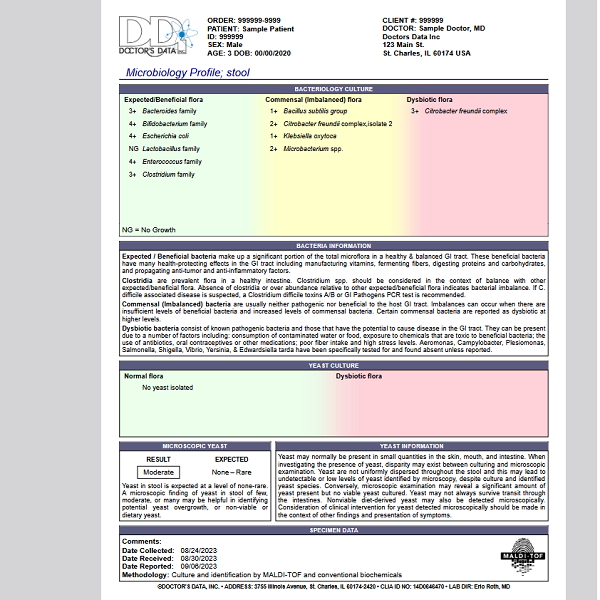
Gastrointestinal issues can very well be caused by the flora in the intestinal tract. The Microbiology profile identifies bacteria in the stool, yeast in the stool, the presence of imbalanced flora, and beneficial flora. Test identifies Clostridium species, and dysbiotic flora, as well as infectious pathogens. Antimicrobial susceptibility is included which identifies pharmaceutical and natural agents to treat bacteria and fungal pathogens. NOTE: Your Doctors Data Microbiology Stool Test report will be sent to the email used when ordering, unless otherwise specified. If you have further questions after receiving your report, a Telehealth Appointment with Dr. Ray Psonak is available. The Microbiology profile includes comprehensive bacteriology and yeast cultures to identify the presence of beneficial flora, imbalanced flora including Clostridium species, and dysbiotic flora, as well as detection of infectious pathogens. Bacteriology Over the past 90-plus years there has been extensive scientific research demonstrating that a good balance of Lactobacilli, Bifidobacteria and beneficial E. coli bacteria are important to the functional health of the gut, and as a consequence, to the whole organism. The benefits identified include inhibition of microbial pathogens, prevention and treatment of antibiotic-associated diarrhea, prevention of travelers’ diarrhea, reduction of lactose intolerance symptoms, reduction in serum cholesterol levels, enhancement of the immune system, and inhibition of the proliferation of Candida albicans. Research has shown that improved biological value of food can be achieved through the activity of Lactobacilli and Bifidobacteria which have been reported to produce folic acid, niacin, thiamin, riboflavin, pyridoxine, biotin and vitamin K. The mechanisms by which these benefits are derived are not yet fully understood. However, research suggests that some of the beneficial effects may be due to the following activities of beneficial bacteria: In a healthy balanced state of intestinal flora, the beneficial bacteria make up a significant proportion of the total microflora. However, in many individuals we see an imbalance of beneficial bacteria and an overgrowth of non-beneficial or even pathogenic microorganisms—dysbiosis. This can be due to a variety of factors including: Patients may present with chronic symptoms such as irritable bowel syndrome, autoimmune diseases such as rheumatoid arthritis, fatigue, chronic headaches and allergies to a variety of foods. Yeast There is some evidence linking yeast infections with more chronic extra-gastrointestinal conditions. Studies suggest that the production of antibodies against Candida albicans may contribute to atopic dermatitis in young adults. Other studies have identified the potential role of candidiasis in chronic fatigue syndrome. Identification of abnormal levels of specific yeast species in the stool is an important diagnostic step in therapeutic planning for the patient with chronic gastrointestinal and extra-gastrointestinal symptoms. Antimicrobial susceptibility testing to prescriptive and natural agents is also performed for appropriate fungal species at no additional charge. This provides the clinician with useful clinical information to help plan an appropriate treatment protocol.
Home /
Shop
Doctors Data Microbiology Stool Test




Microbiology Stool Test
Test Features
Useful for:
View Sample Report
FAQ's about At Home Health Tests
Detailed Information
A good balance of beneficial microflora has been known to be associated with health benefits since the turn of the century. At that time Metchnikoff drew attention to the adverse effects of dysbiotic gut microflora on the host and suggested that ingestion of fermented milks ameliorated what he called “autointoxication.” He proposed that the consumption of large quantities of Lactobacillus species would reduce the number of toxin-producing bacteria and result in better health and increased lifespan.
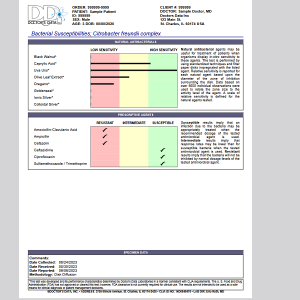
Antimicrobial susceptibility testing to prescriptive and natural agents is also performed for appropriate bacterial species at no additional charge. This provides the clinician with important and specific clinical information to help plan an appropriate treatment protocol.
Infection with yeast species can cause a variety of symptoms, both intra- and extra-gastrointestinal, and in many cases, may escape suspicion as a pathogenic agent. Controversy remains as to the relationship between Candida infection and episodes of recurrent diarrhea. However, episodes of yeast infection after short-term and long-term antibiotic use have been identified in patients with both gastrointestinal and vaginal symptoms.Add a review for Doctors Data Microbiology Stool Test
Doctors Data Microbiology Stool Test
0 Reviews
$159.00
A one-time price of $159.00 will be added to your order.
There are no reviews yet, submit yours in the box provided.
Submitting Your Review, Please Wait
Your Review Has Been Submitted Successfully
You must include a title, rating, and message in your review.
Your review could not be saved. Please refresh the page and try again.
Your Review Title
Your Rating
Your Review